1
The Dream
Build the world’s first burger chain where the brand, the cooking, the power, and the joke all come from the sun.
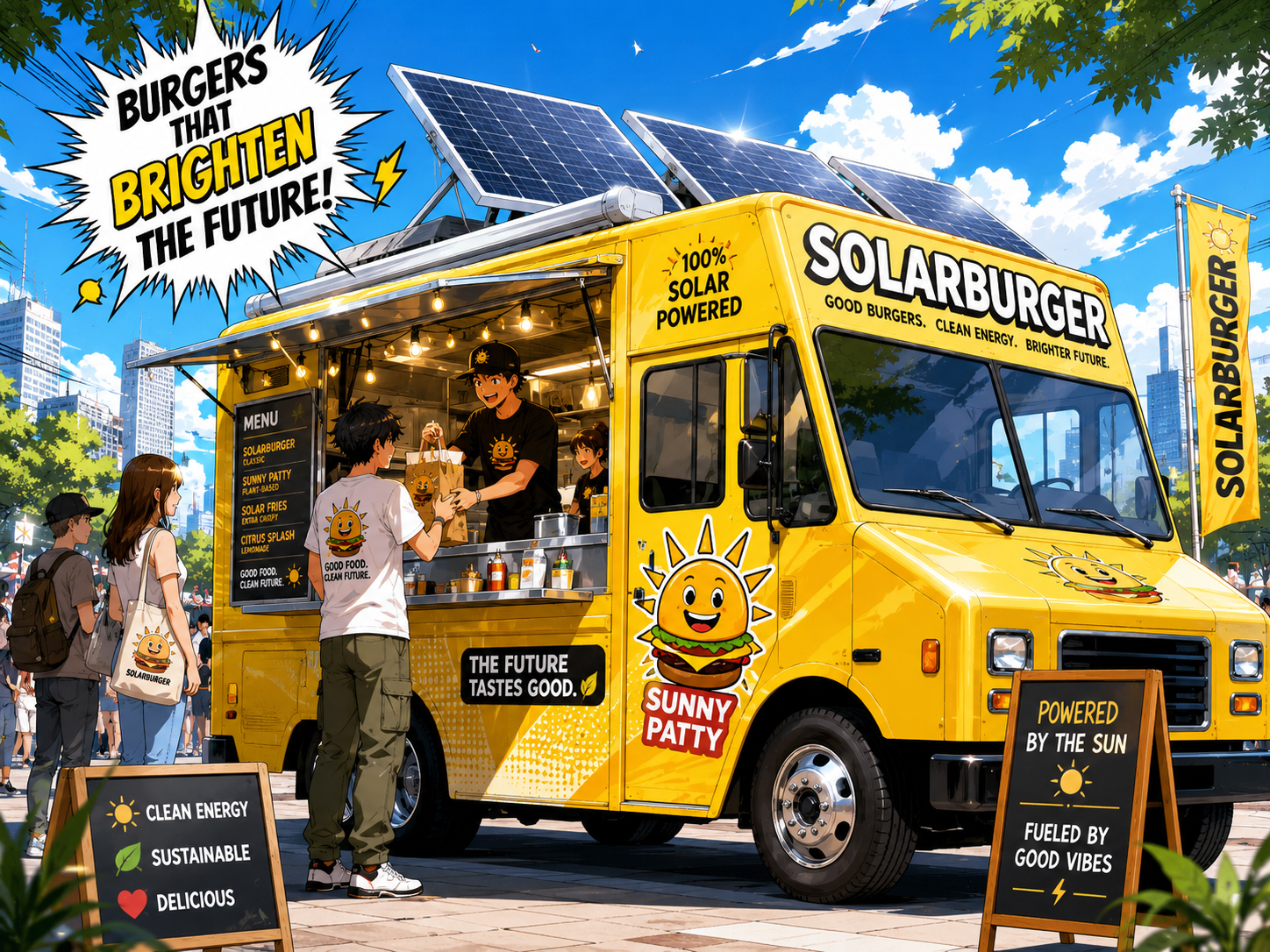
Manga startup comedy
A burger chain powered by sunshine, panic, and impossible optimism.
Solarburger.com is the funny tale of a venture team trying to change fast food with solar energy. The dream is simple: cook great burgers with the sun. The problem is everything else.
The premise
One founder sees a burger, sees the sun, and writes the most dangerous startup equation in fast food history: solar + burger = future.
Build the world’s first burger chain where the brand, the cooking, the power, and the joke all come from the sun.
Clouds. Permits. Investors. Melted spatulas. Slow cook times. Customers who want lunch before sunset.
A fast, bright, funny comic world about solar energy, startup chaos, hamburgers, and heroic ambition.
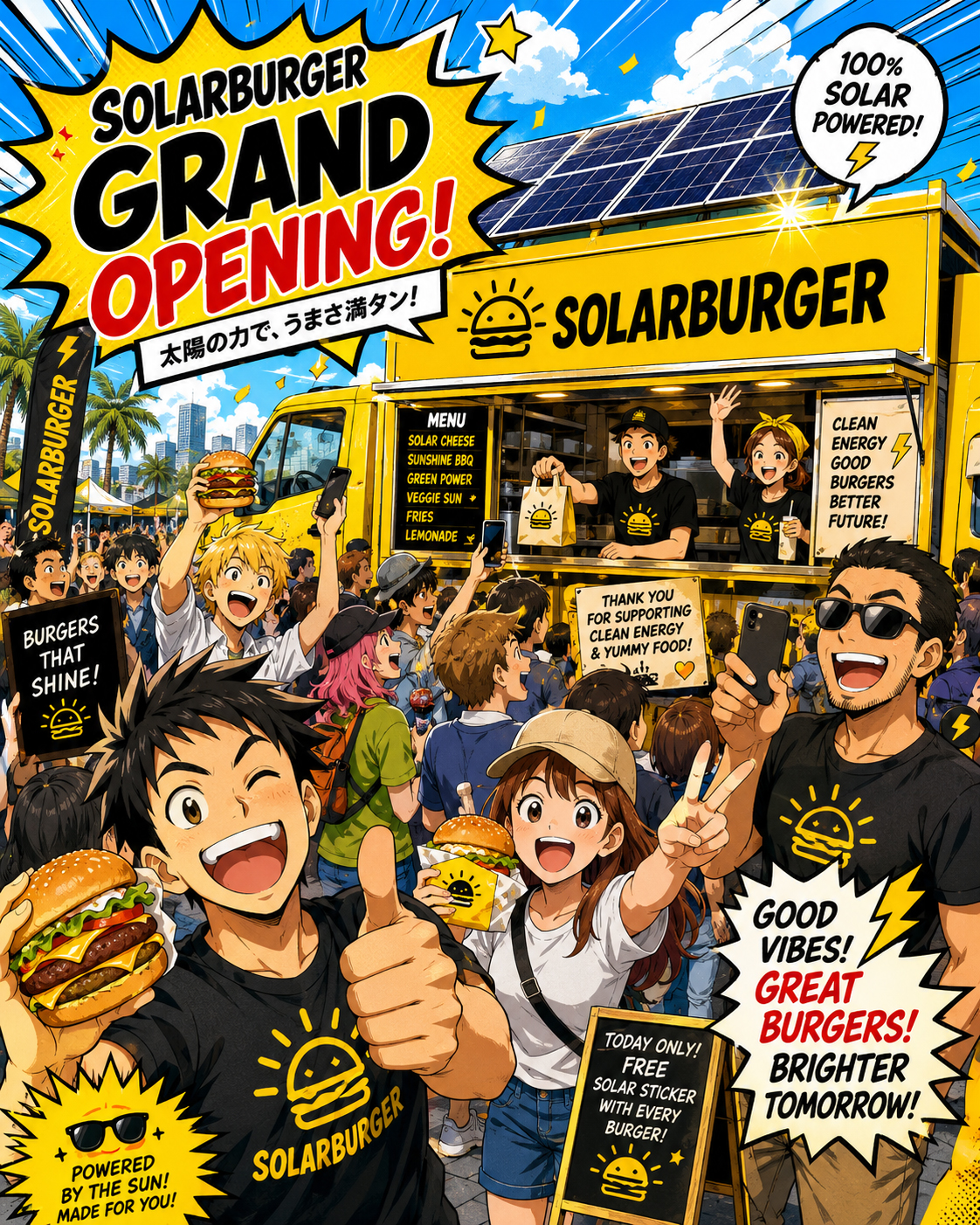
The joke is fiction. The solar is real.
Solarburger.com is not a technical manual. It is a comedy universe where real solar ideas crash into restaurant reality, investor meetings, inspections, branding, weather, batteries, refrigeration, and the eternal question: “How many burgers per hour?”
The dream is not completely crazy. Solar energy can power kitchens, food trucks, batteries, signage, refrigeration, lights, point-of-sale systems, and event operations. The manga just turns that possibility into a burger-sized adventure.
How It WorksSeason One
Season One begins with the simple question no sane restaurant consultant would ever ask: can sunlight cook lunch before the customer gets angry?
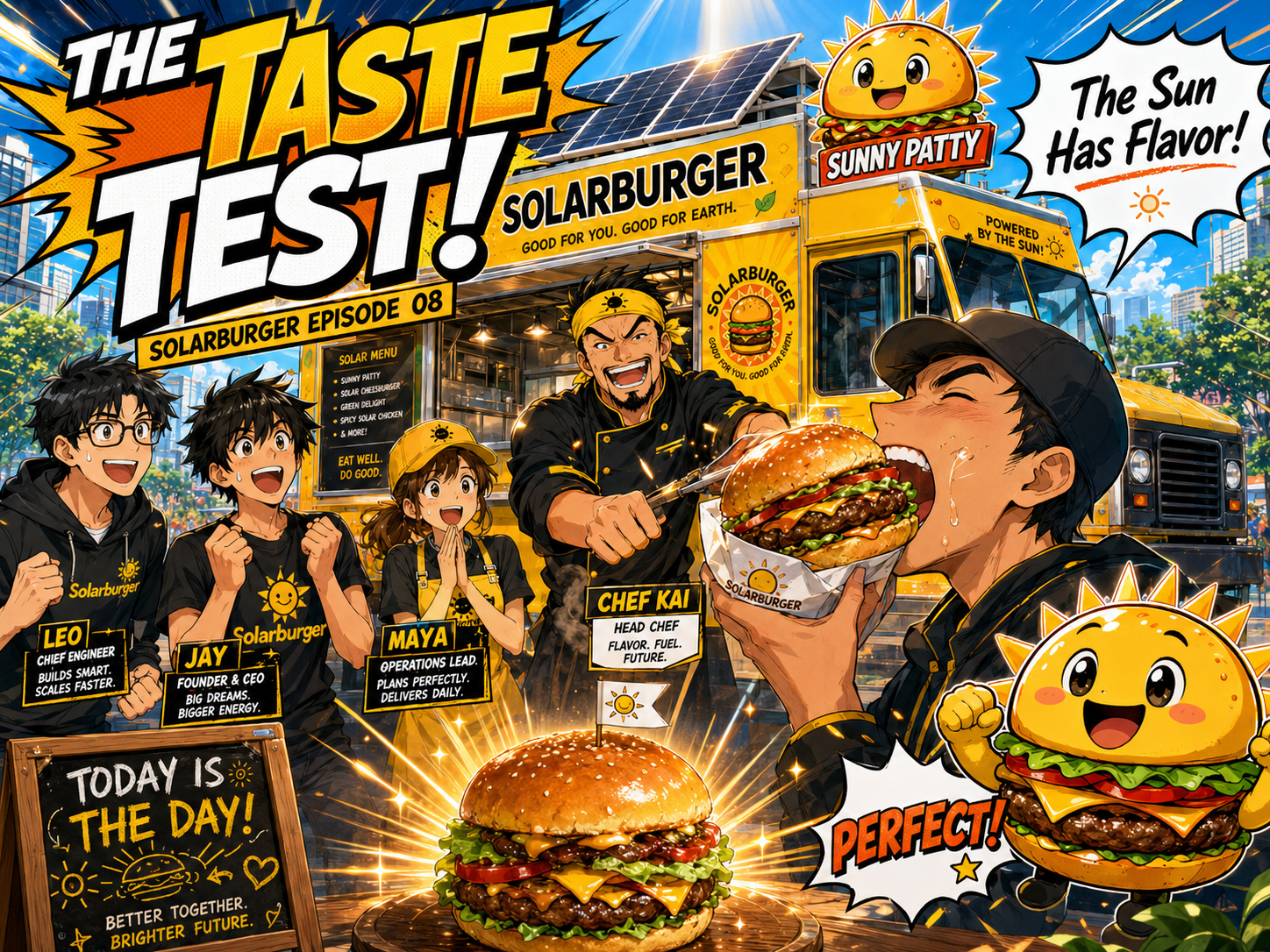 Episode 01
The founder draws the first plan on a napkin: solar + burger = future.
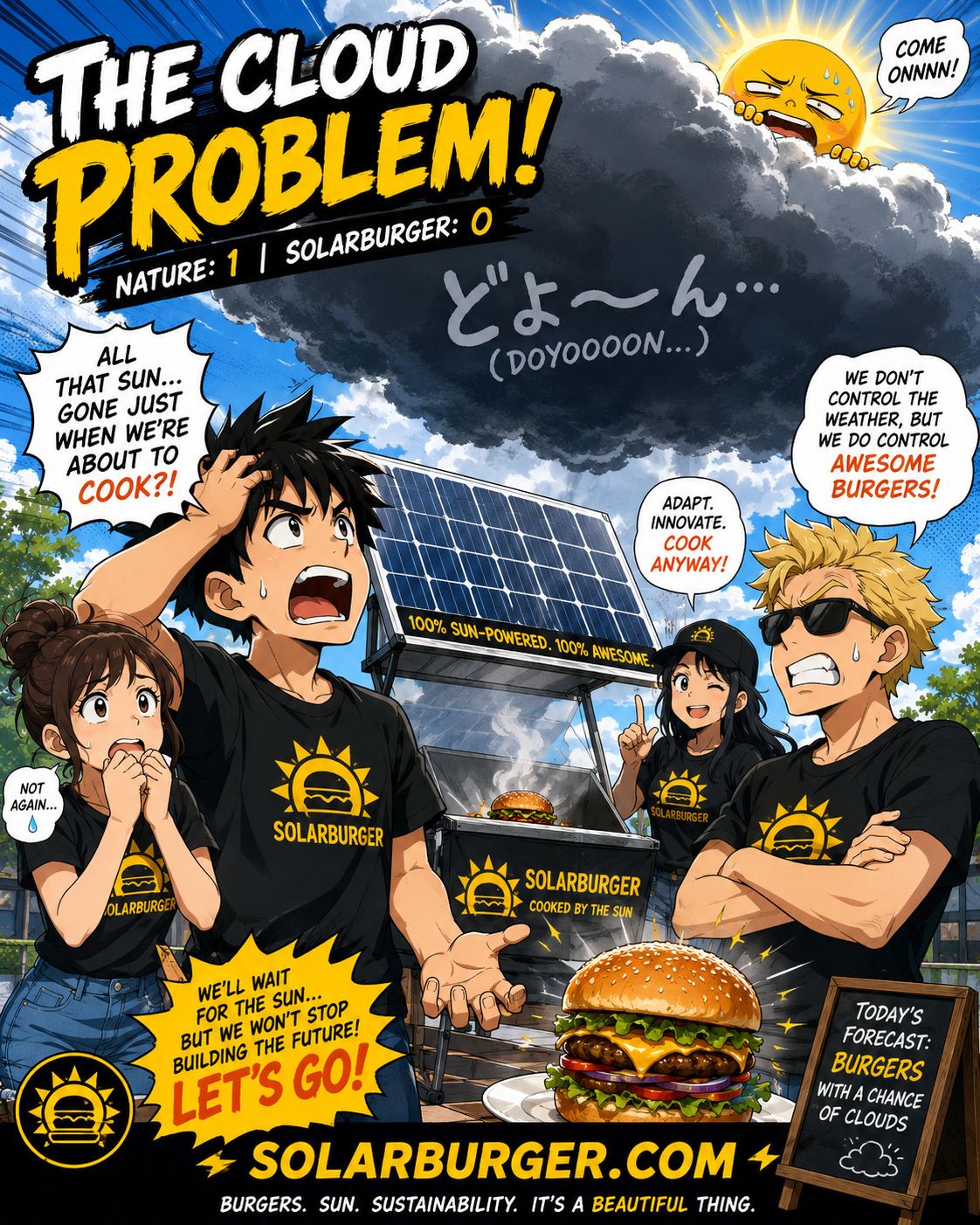 Episode 02
The solar grill works perfectly until the sky develops an opinion.
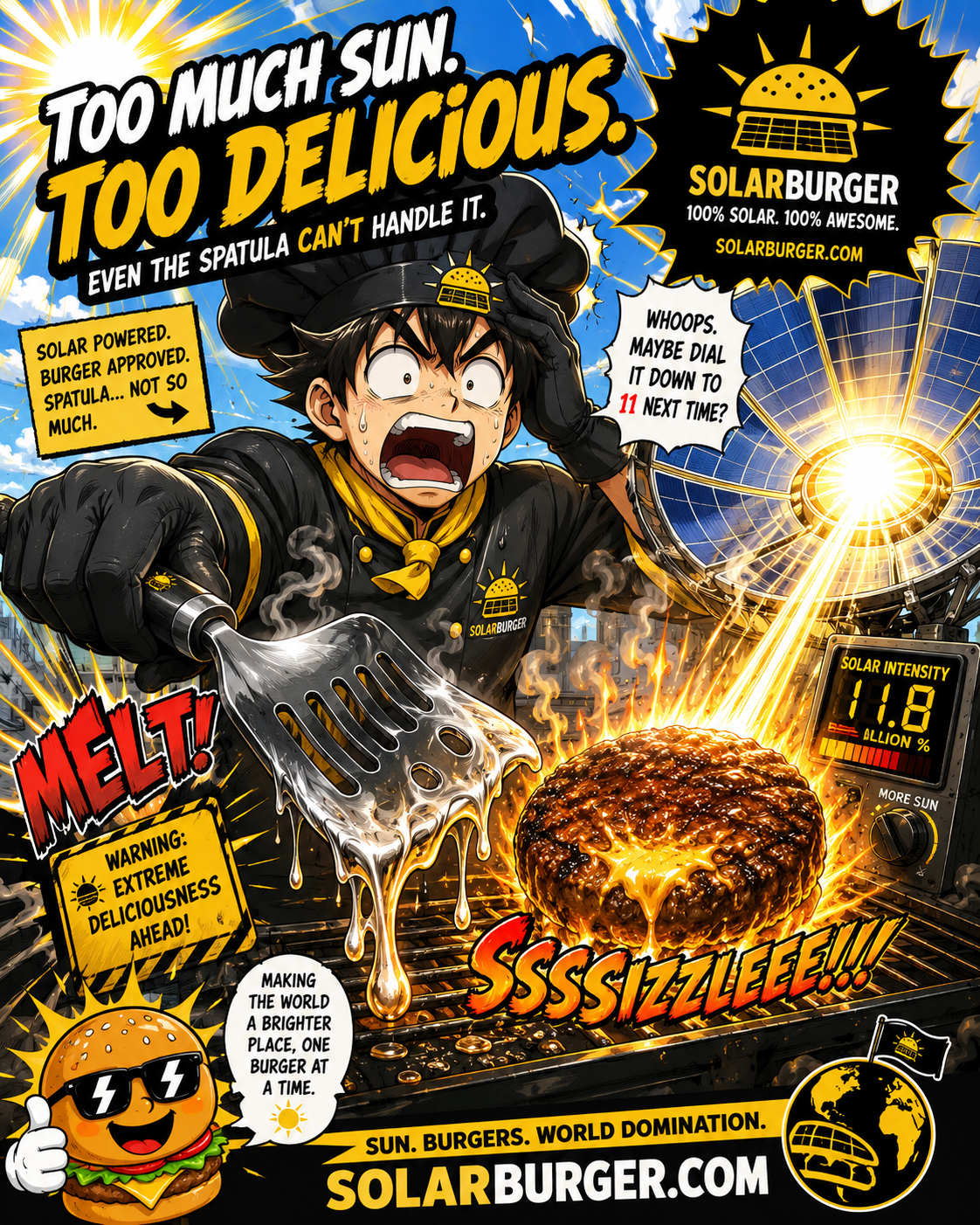 Episode 03
The team increases reflector power and learns proof of concept can be terrifying.
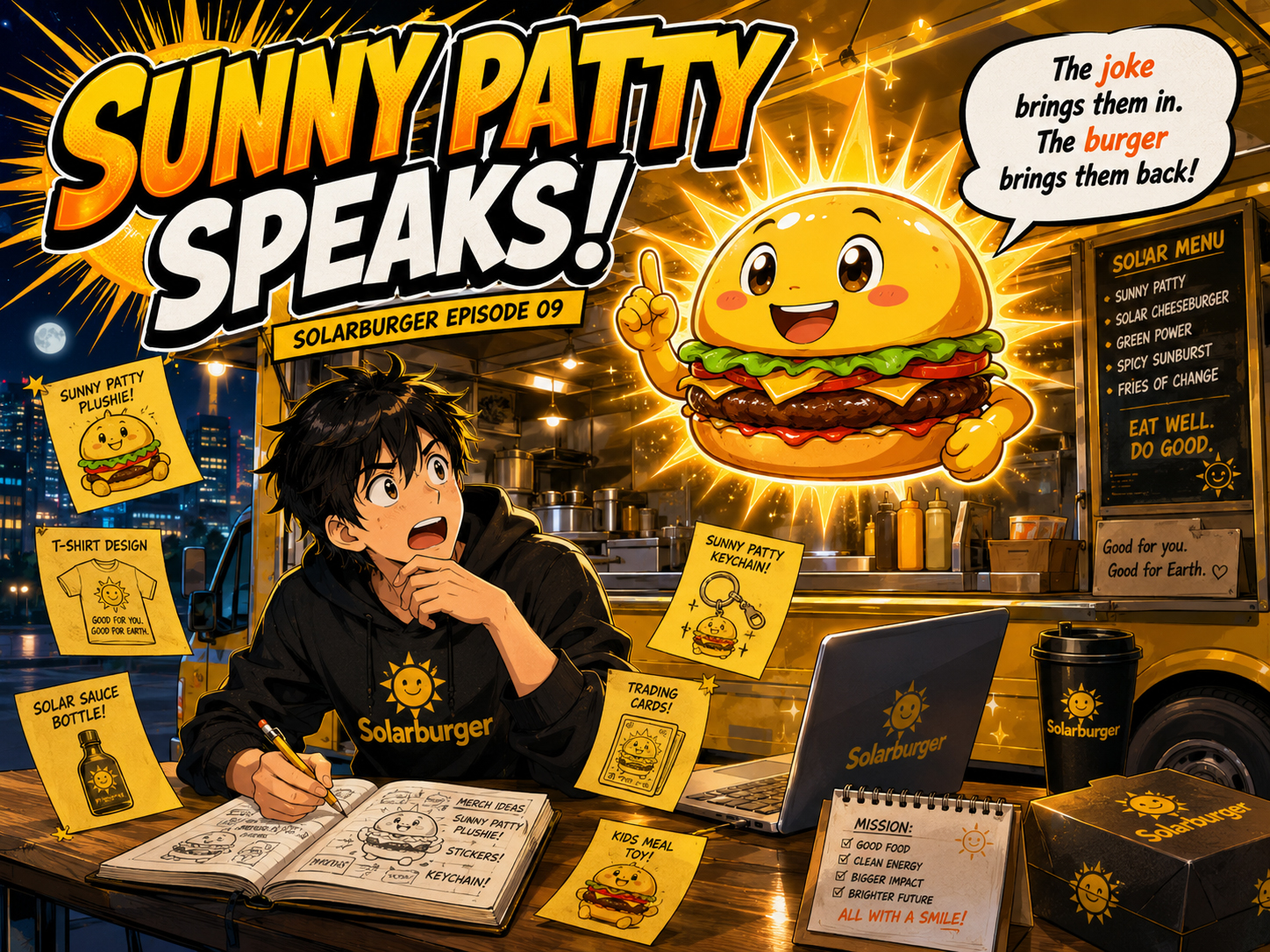 Episode 04
A customer asks what happens at night. The room becomes very quiet.
Meet the team
Solarburger is powered by ambition, spreadsheets, overconfidence, weather anxiety, and one extremely confident burger-sun mascot.
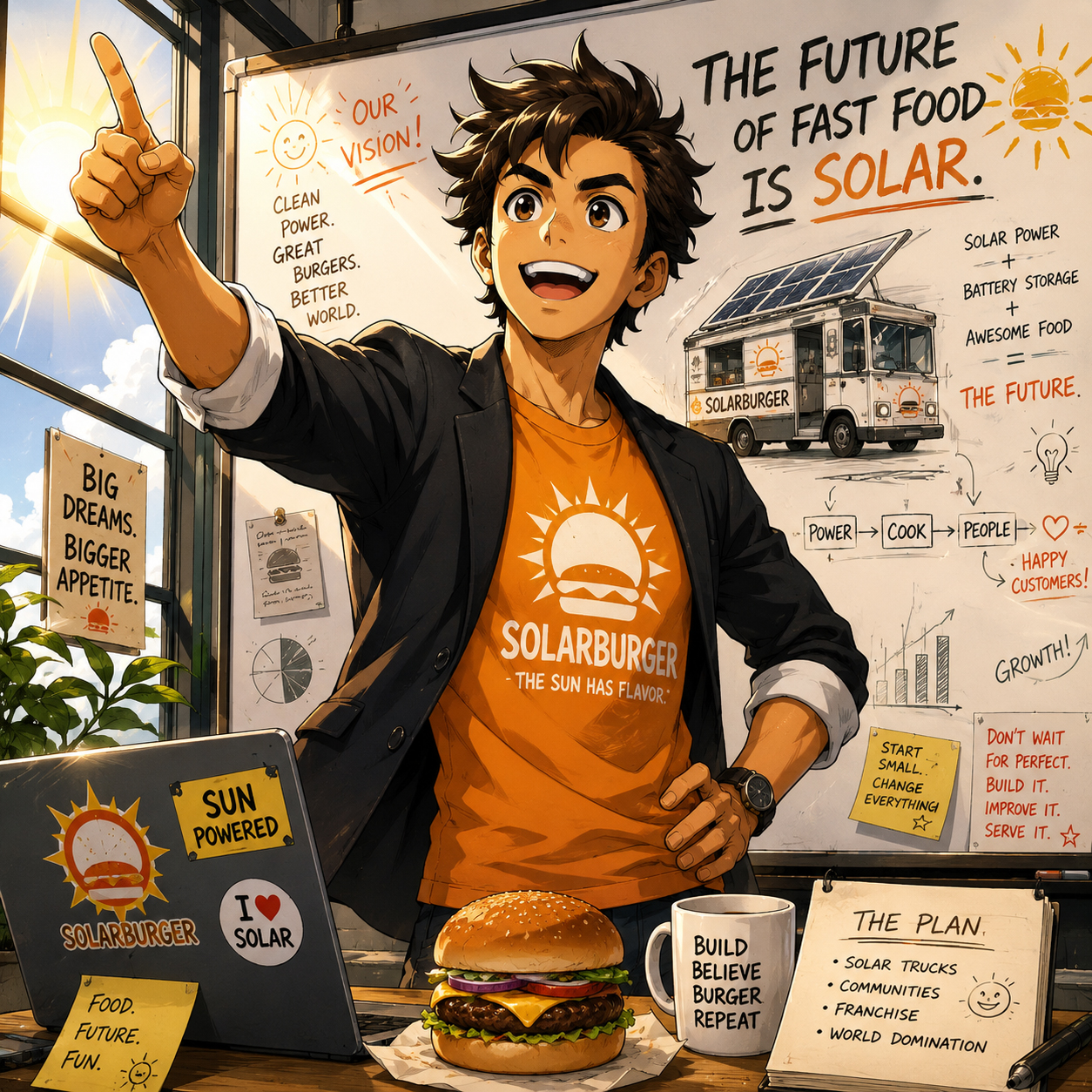
Big smile. Bigger promises. Believes fast food can be changed with sunshine and courage.
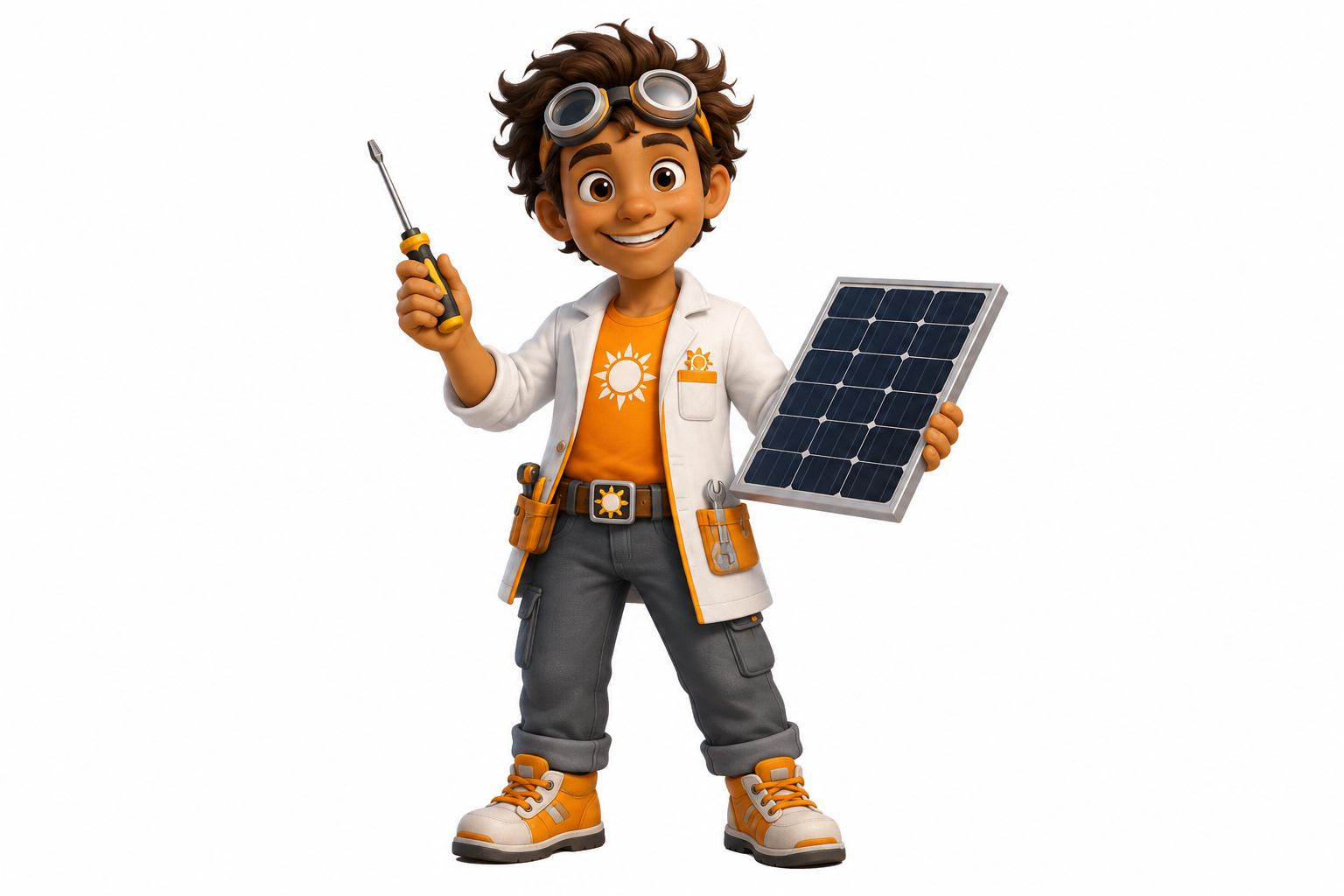
Turns wild ideas into wiring diagrams, cooking curves, batteries, and nervous spreadsheets.
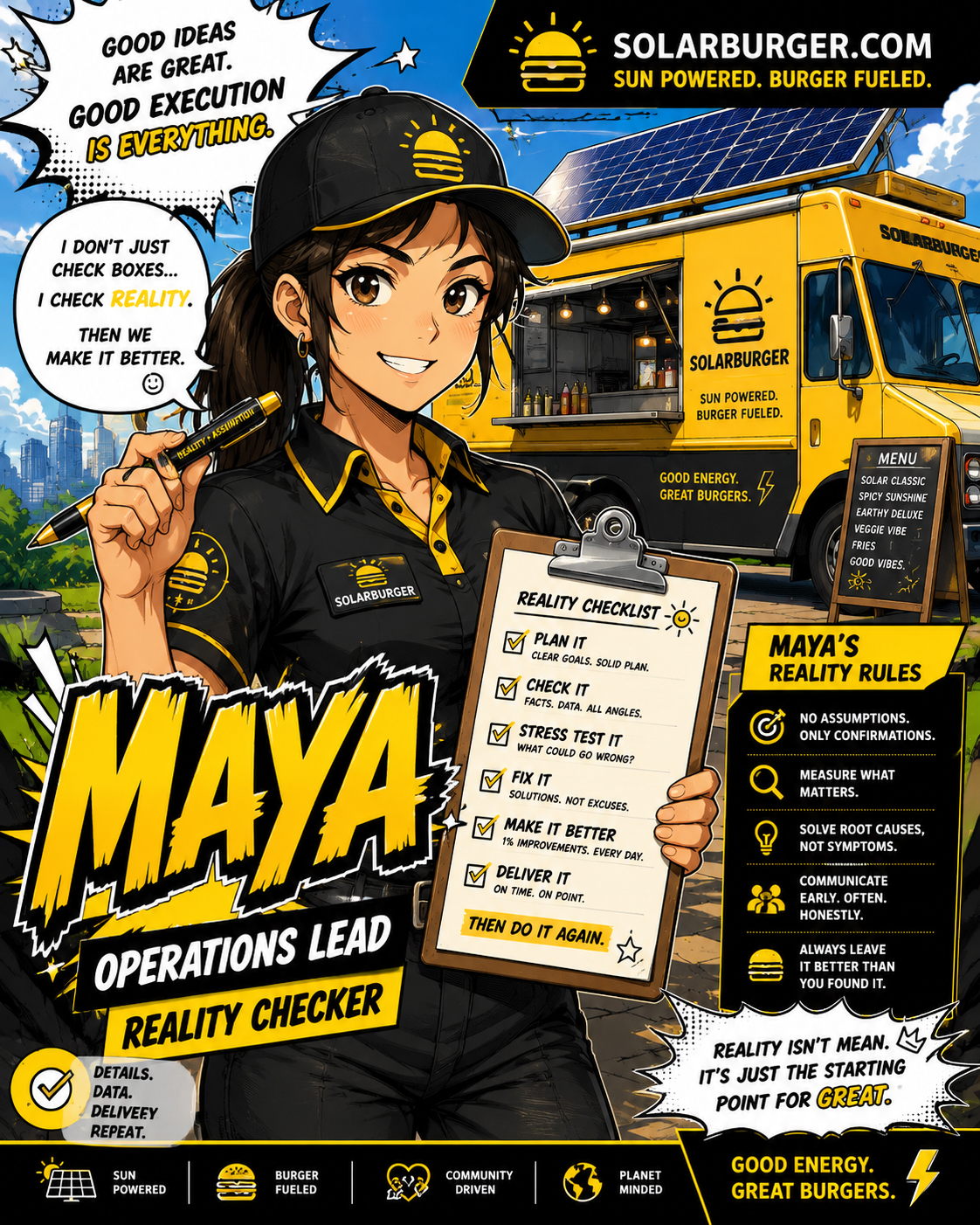
Clipboard in hand, eyes wide open, keeping the startup from becoming a solar-powered disaster.
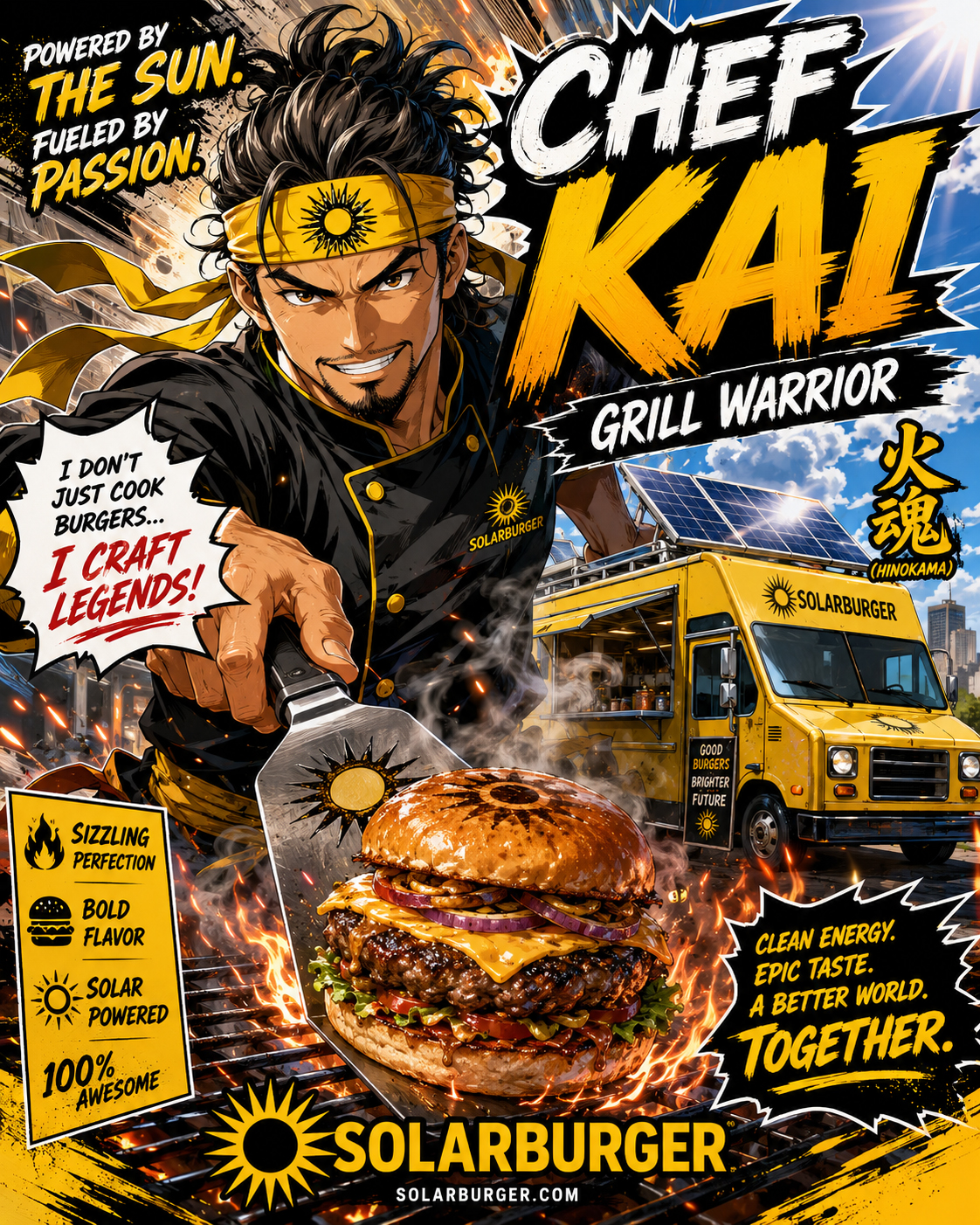
The grill warrior who discovers solar cooking is funny, difficult, and sometimes delicious.
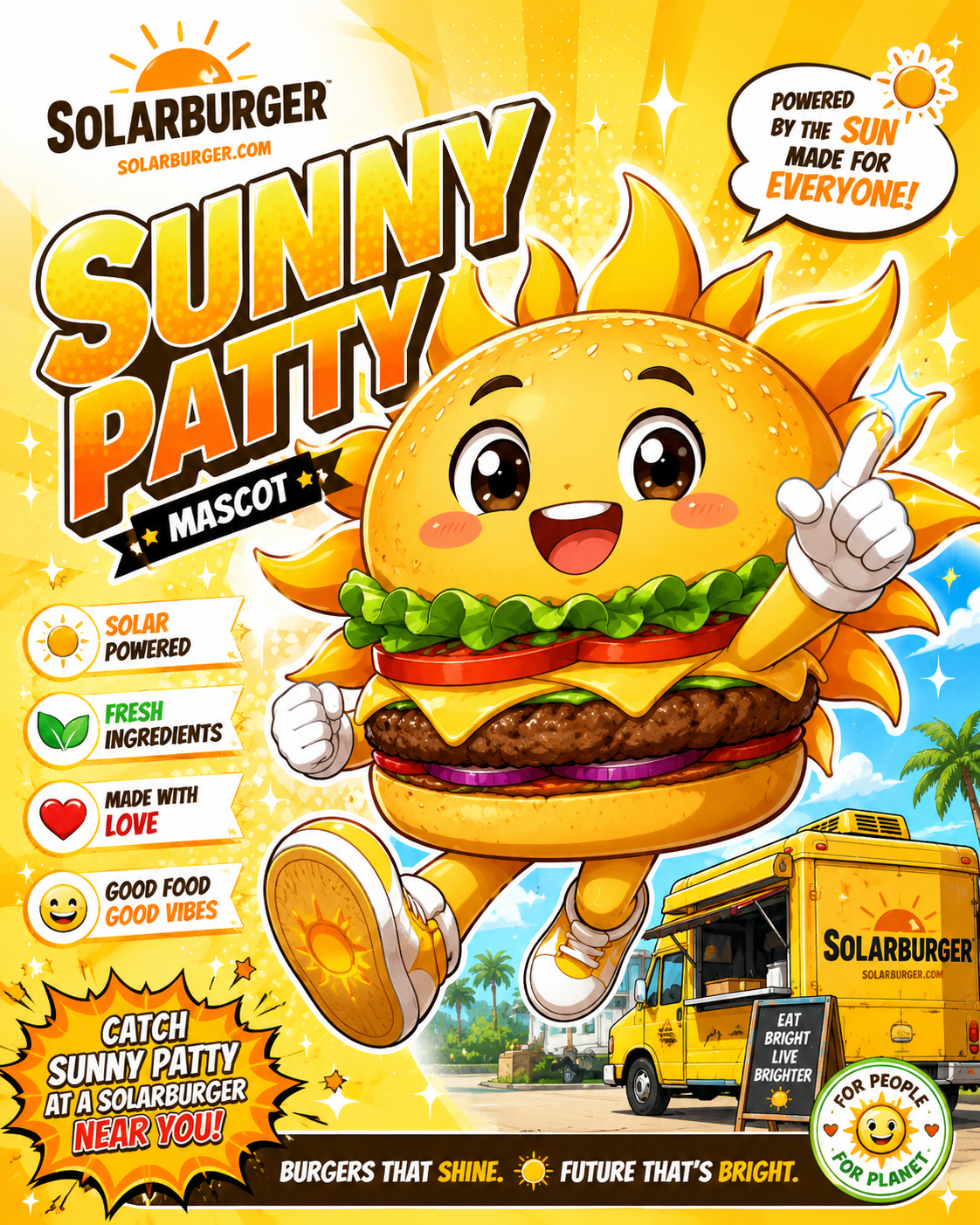
Half sun. Half burger. All questionable business advice.
Ask Sunny Patty
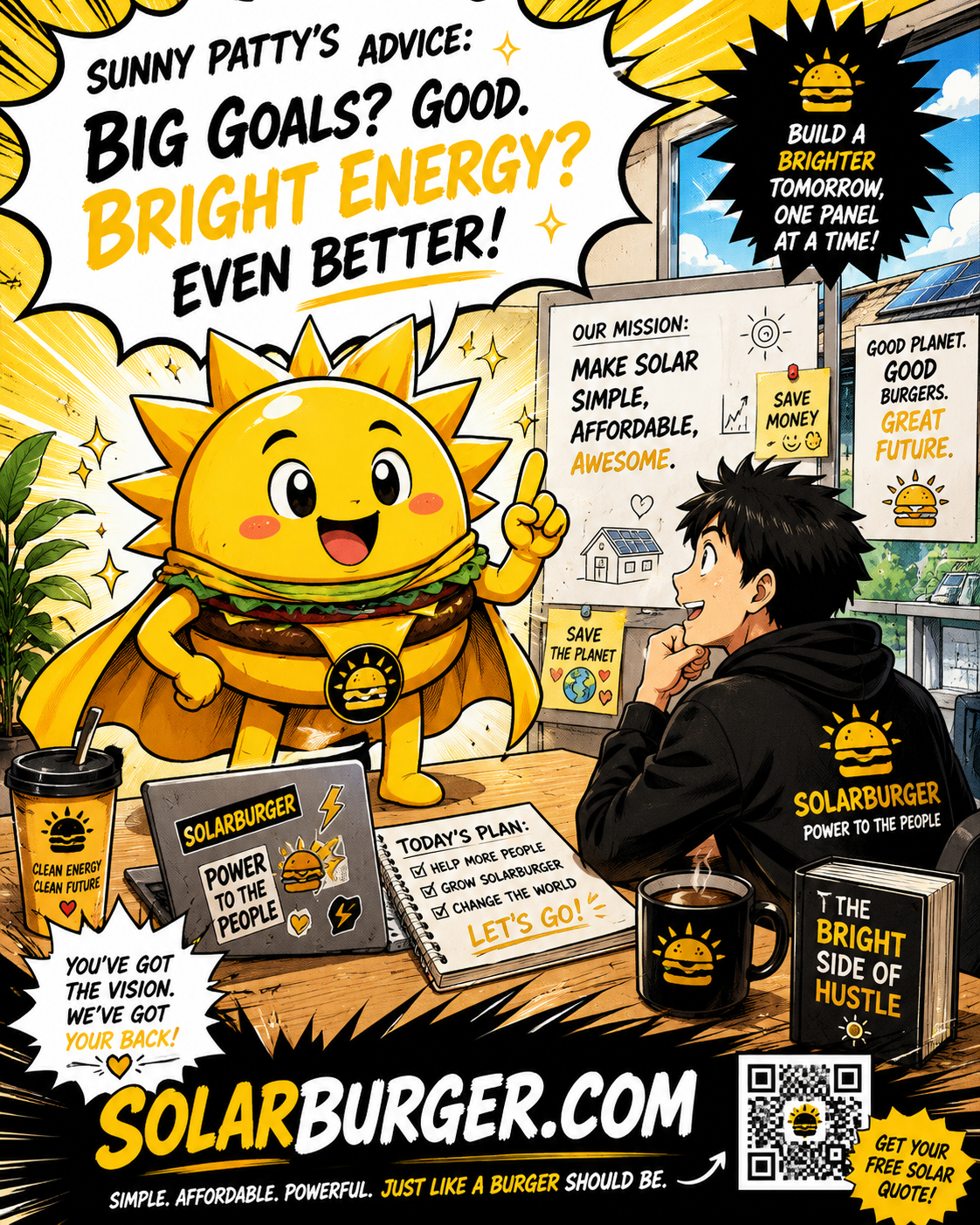
Sunny Patty is the unofficial Solarburger mascot: half sun, half burger, all confidence. He believes every operational problem can be solved with more sunlight, better branding, and a louder lunch special.
The business comedy
Solarburger is funny because the startup problems are real: power, cooking speed, safety, permitting, batteries, refrigeration, staffing, customers, and weather.
Solar, battery storage, refrigeration, lighting, ventilation, and cooking loads turn lunch into an engineering meeting.
The team discovers that “sun-powered burger miracle” is not a standard checkbox on most permit applications.
The first rule of food service: inspiration matters, but hungry people still measure time.
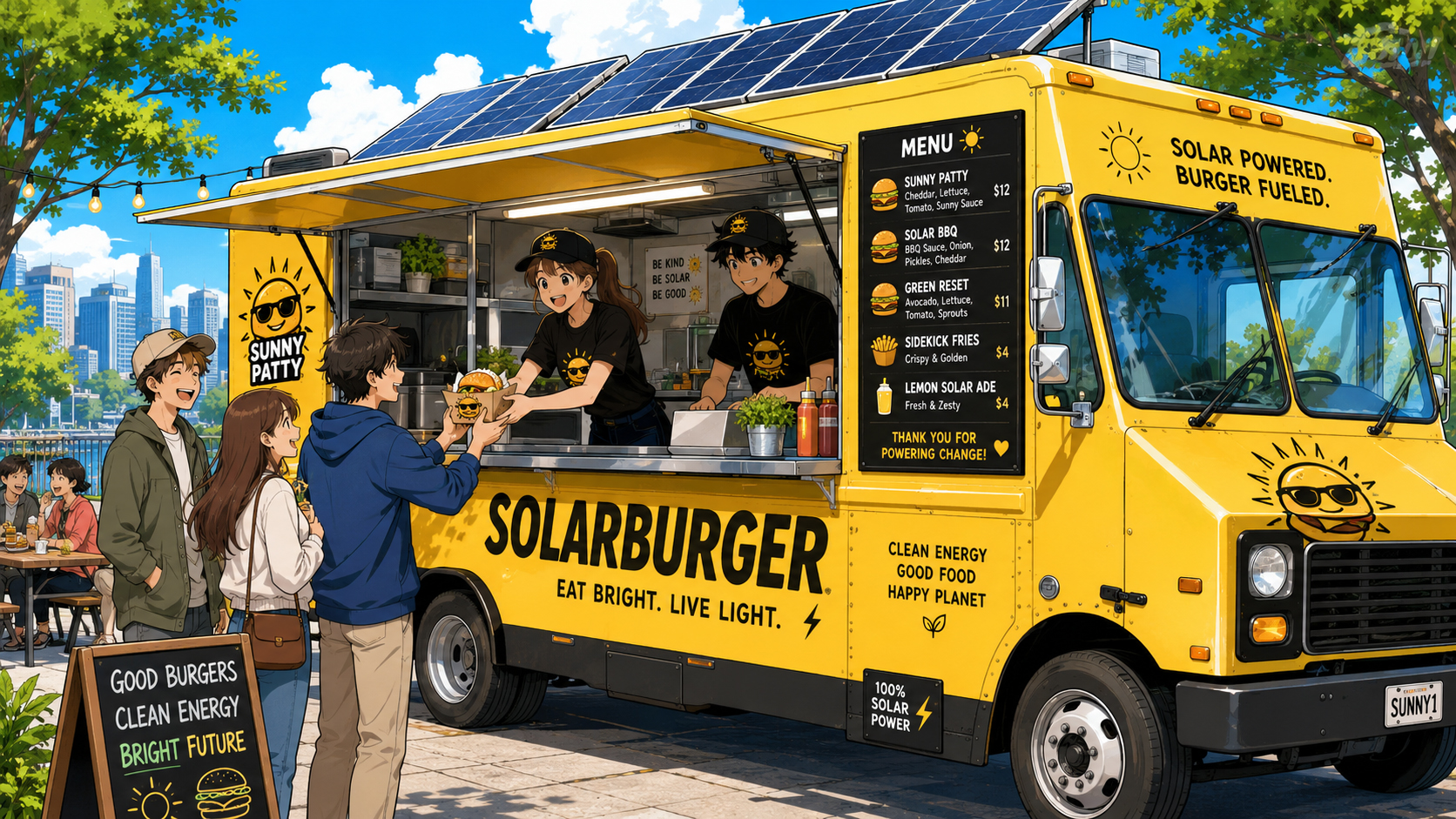
The solar food truck dream
The Solarburger truck is where the comedy gets real: clean power, hot food, cold drinks, bright lights, no generator fumes, and one operator asking if anyone checked the forecast.
Explore Solarburger.com
Read the manga-style startup comedy one disaster at a time.
Meet the founder, engineer, operator, chef, customers, and Sunny Patty.
The full Solarburger origin: dream, disaster, comeback, lunch.
What a solar burger might be, and why the idea refuses to die.
Branding, investors, units, operations, margins, and comic overconfidence.
The mobile stage for solar power, batteries, food service, and chaos.
Solarburger.com
But the sun showed up anyway. The burger got warmer. The team got louder. The business plan got stranger. And somewhere between a melted spatula and a perfect bun, Solarburger became a story.