 1
1
Solar roof
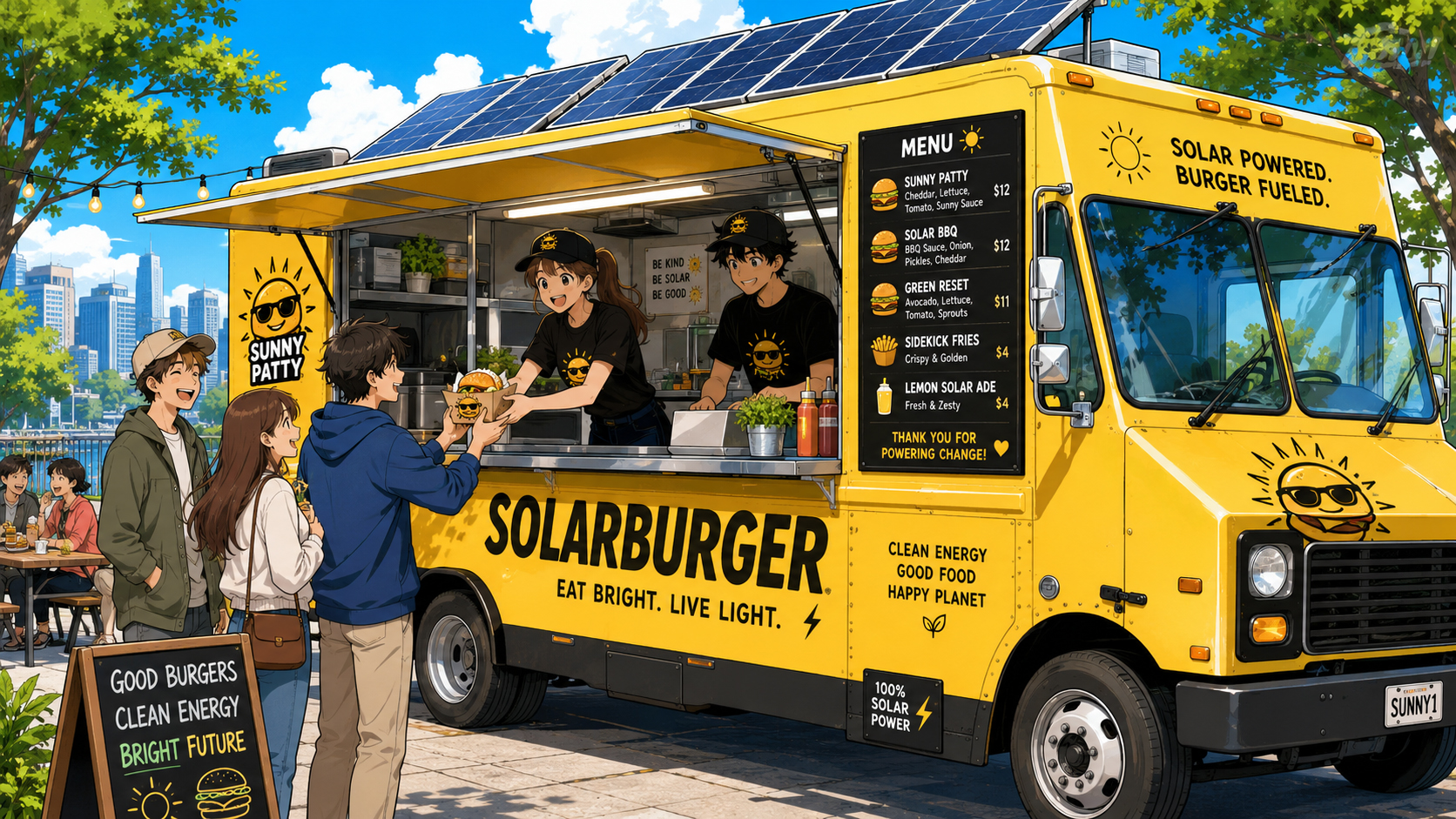
Panels on top make the truck instantly understandable. Customers see the story before they read the menu: sunlight is part of the burger.
The first real test
The Solarburger food truck is where the joke becomes measurable: real customers, real cook times, real permits, real batteries, and a very real line forming at lunchtime.
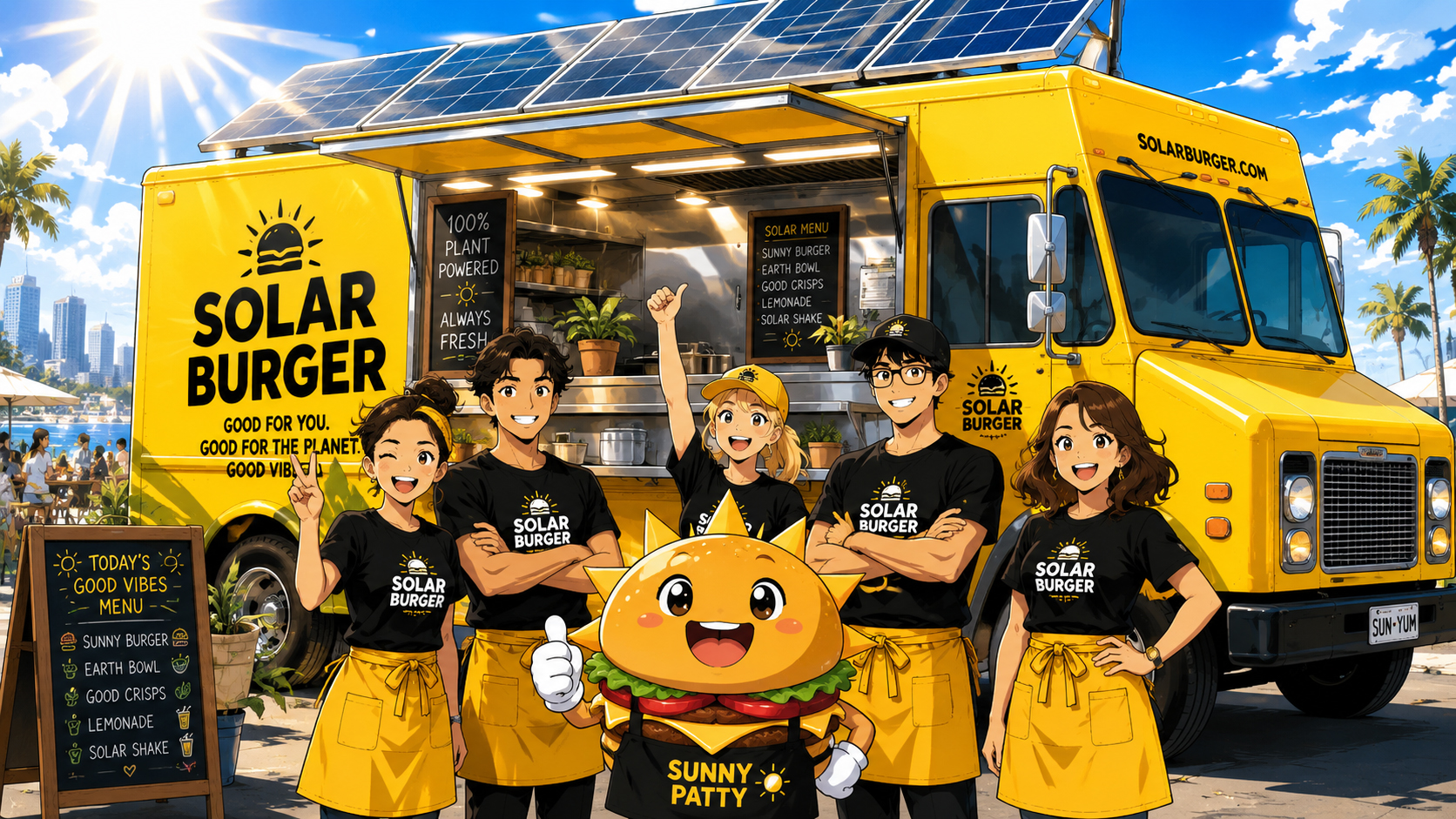 Mobile
A full restaurant is expensive. A pitch deck is too easy. The food truck forces Solarburger to answer the brutal question: can the sun-powered burger idea survive actual customers?
In the manga universe, the first Solarburger truck is half restaurant, half rolling solar lab, half comic disaster. The math does not add up, which is exactly why the engineer is sweating.
1
Panels on top make the truck instantly understandable. Customers see the story before they read the menu: sunlight is part of the burger.
 2
2
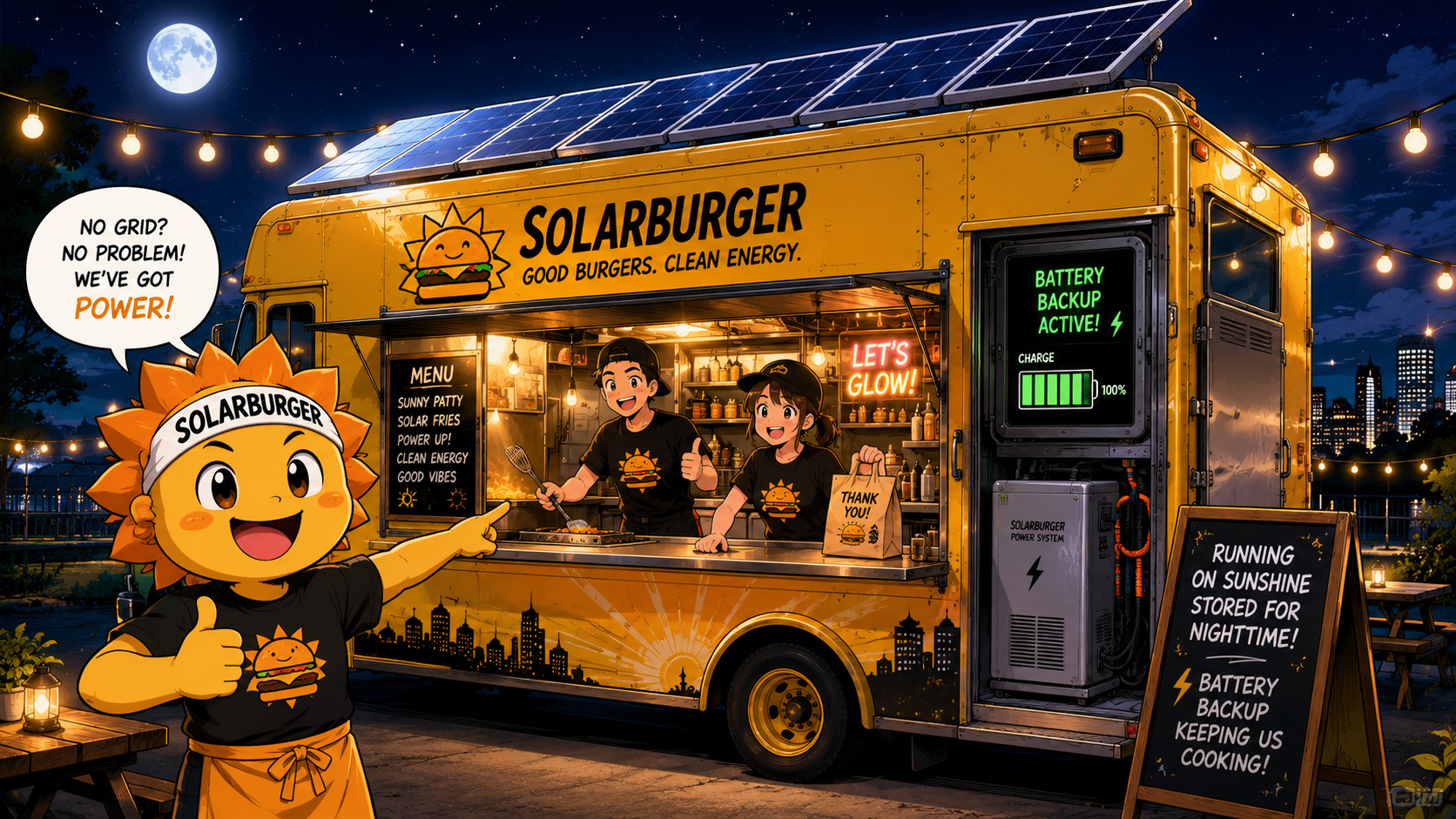
The battery is the quiet hero. It protects refrigeration, lights, order systems, and service when clouds arrive or the lunch rush refuses to wait.
 3
3
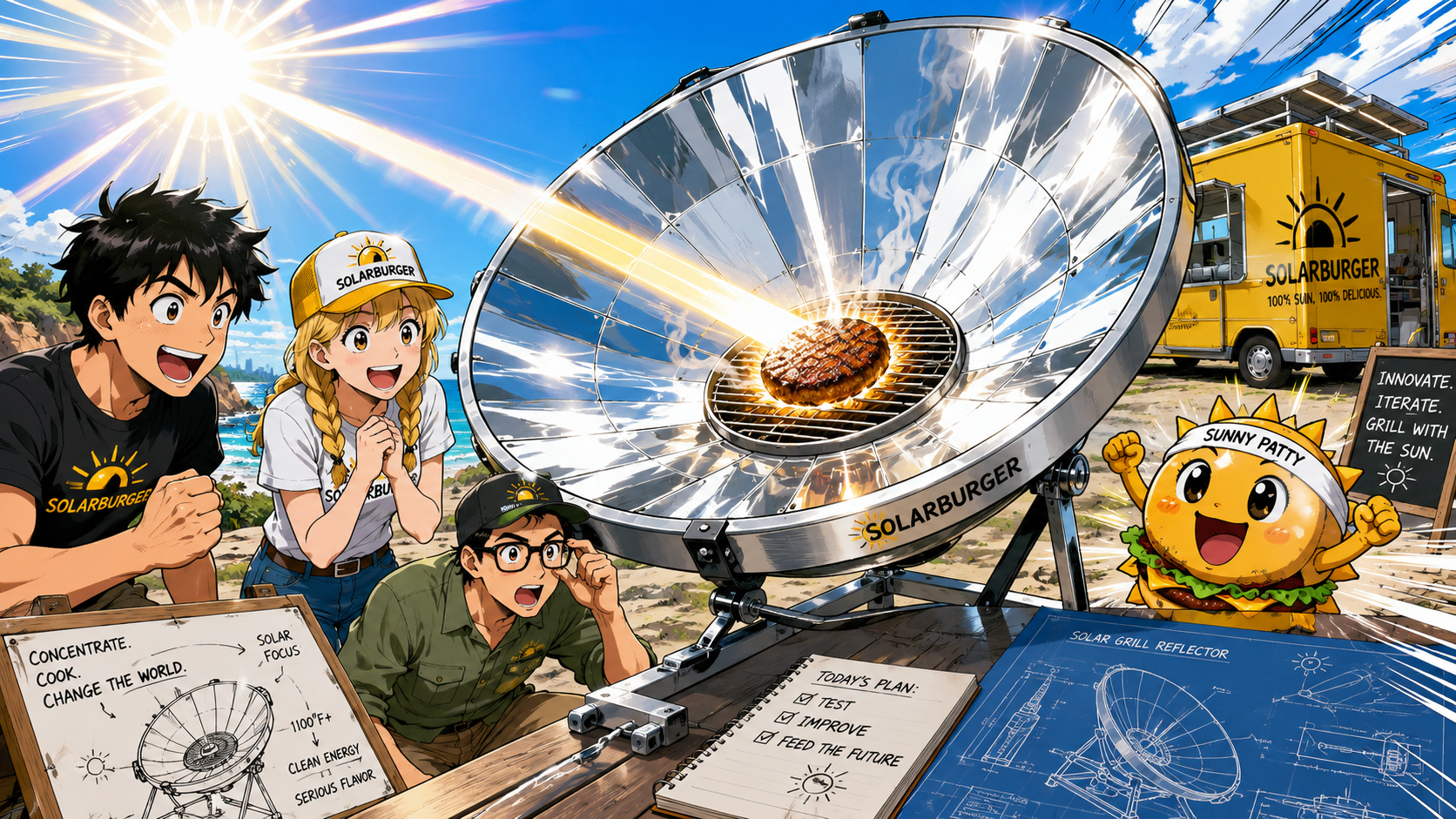
The cooking system creates the magic. The chef creates the food. The operator creates the rule: demonstrations are fun, but customers still need lunch.
The truck parks. The sun shines. The sign goes up. The line forms. For one beautiful minute, everyone believes the business plan.
The Solarburger truck lets the team test the market before building a flagship restaurant. It also gives the manga a perfect stage: one compact box full of food, wires, ambition, and consequences.
A truck is cheaper and faster to test than a full restaurant, especially when the concept includes unusual solar equipment.
The truck is a rolling advertisement. Every stop becomes a public demonstration of the Solarburger idea.
Fairs, clean-energy events, school demos, city events, and solar conferences become natural launch sites.
Customers reveal the truth fast: Is the burger good? Is the wait too long? Do people tell friends?
The founder imagines a glowing Solarburger truck rolling into festivals like a clean-energy superhero: panels on top, Sunny Patty waving from the side, burgers sizzling, customers cheering, and investors taking photos with tears in their eyes.
“We are not parking. We are landing.”
The operator imagines permits, health inspections, battery state of charge, generator rules, refrigeration loads, parking access, shade problems, staffing, cleaning, inventory, and whether the truck can actually serve 100 lunches without becoming a comic crime scene.
“We are not landing until the checklist is complete.”
The truck creates some of the best Solarburger story moments because every business problem happens in public.
The team builds the first mobile Solarburger with panels on the roof, batteries inside, and a sign bigger than the business plan.
City Hall tries to decide whether the truck is a restaurant, a power plant, a science fair, or a new category of paperwork.
The first real Solarburger is served from the truck. The crowd expects a gimmick. The chef gives them a burger.
The truck’s lessons become the foundation for the first Solarburger location. The battery system finally gets its heroic moment.
The operator insists this list exists. The founder keeps trying to rename it “The Solarburger Launch Scroll.”
| System | What it must do | Comic risk |
|---|---|---|
| Solar panels | Provide visible clean-energy identity and contribute power to the truck system. | Founder claims the panels also improve flavor. |
| Battery storage | Keep critical loads running during clouds, evening service, and demonstration chaos. | Engineer names the battery “Lunch Insurance.” |
| Cooking equipment | Make safe, consistent, delicious burgers at a practical speed. | Chef refuses to serve “prototype meat.” |
| Refrigeration | Protect ingredients and food safety like a real business. | Operator says this is more important than the mascot. Mascot disagrees. |
| Permits | Make the truck legal, inspectable, and explainable. | Inspector asks if sunlight requires a separate line item. |
| Branding | Make people stop, smile, understand, and remember. | Sunny Patty becomes the most competent salesperson. |
A solar-powered burger truck is funny because it is over-the-top. It is smart because it turns clean energy into a public experience people can see, smell, taste, and share.