 1
1
Catch the sunlight
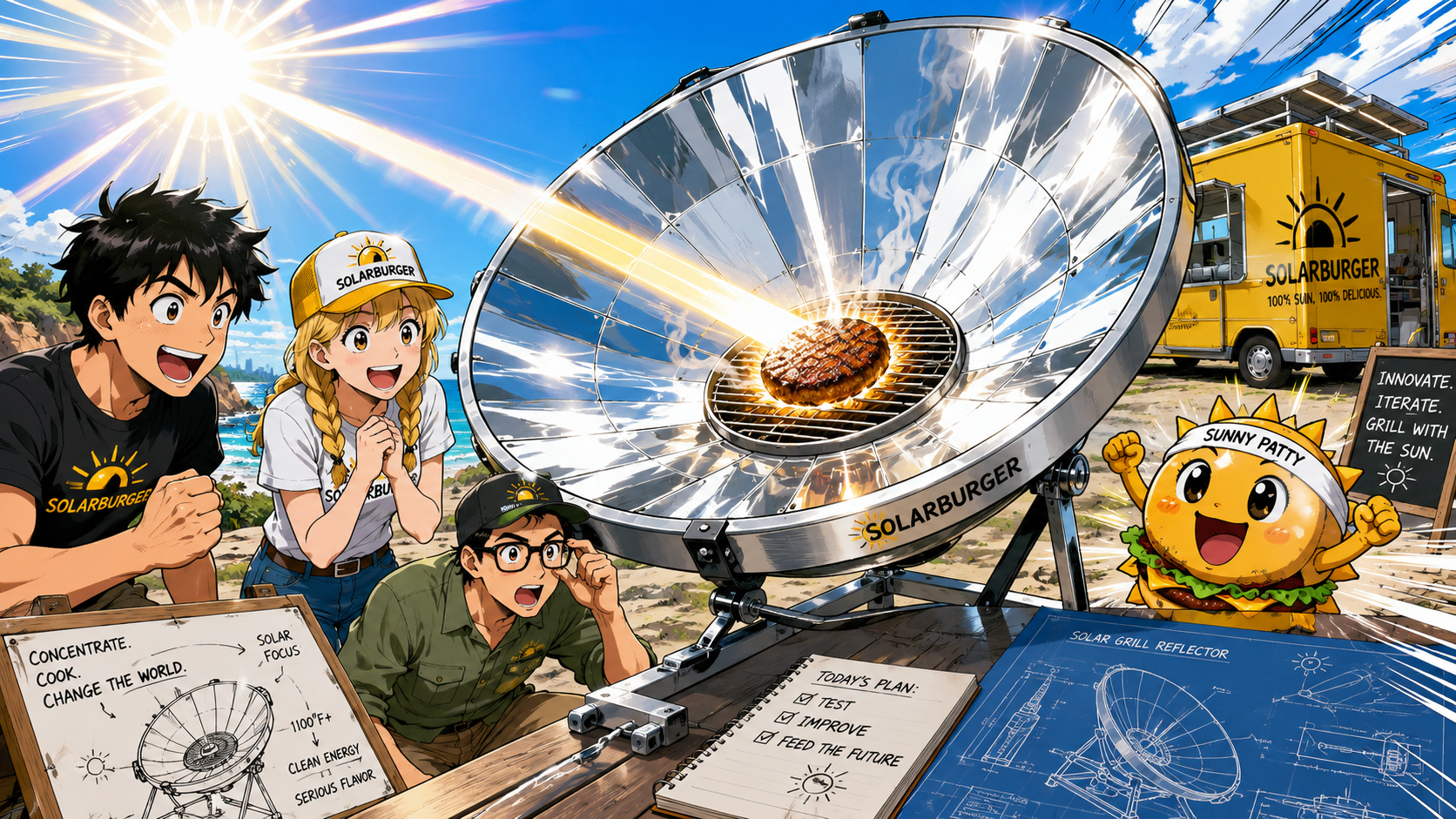
Reflectors, panels, or solar collection systems grab the power of the day and point the business toward the most dramatic lunch possible.
What is a Solar Burger?
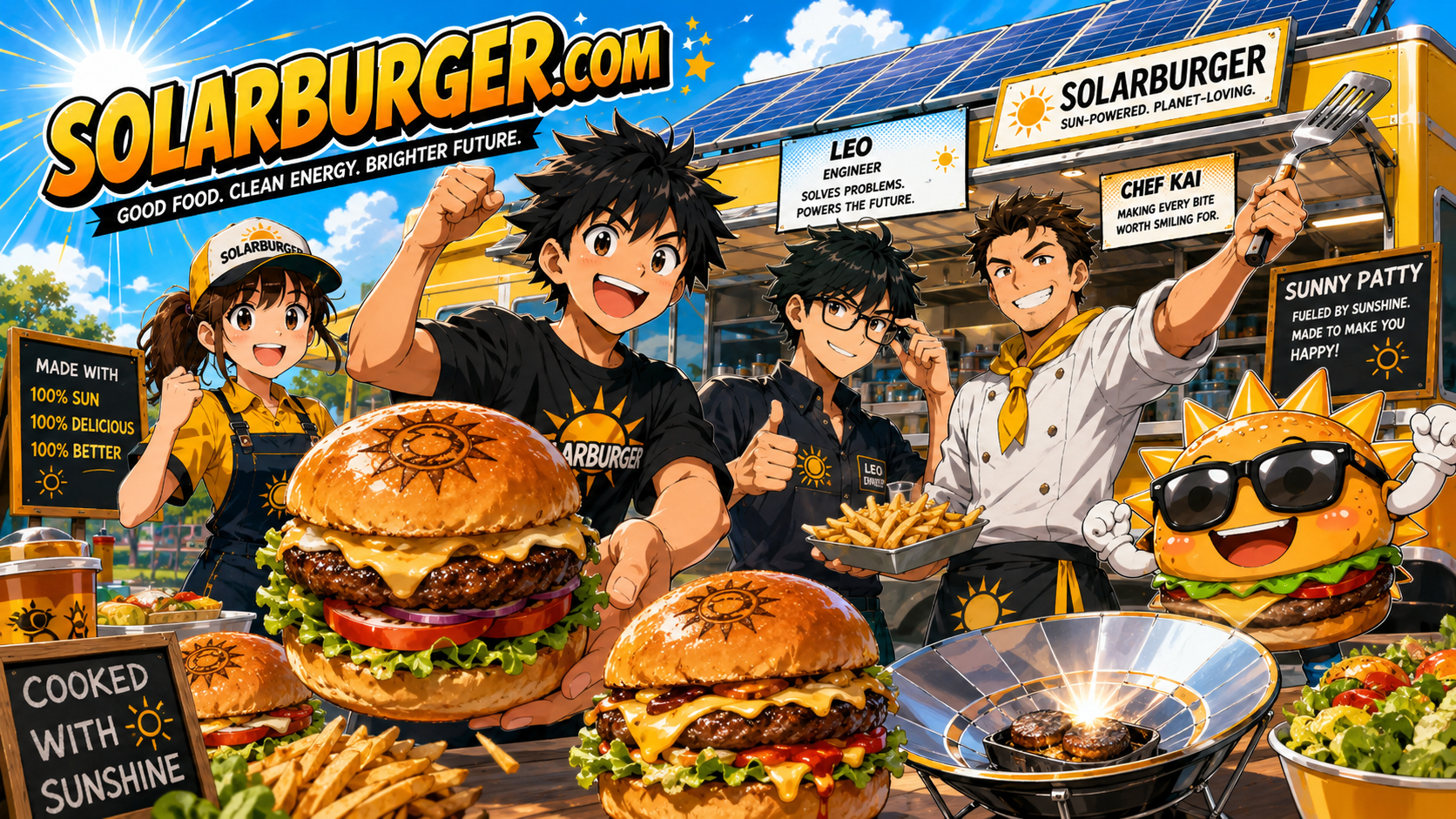
In the Solarburger manga universe, a Solar Burger is more than lunch. It is a ridiculous, delicious proof that clean energy can be visible, useful, funny, and hot enough to melt the spatula.
 Sun
SunThat is the Solarburger promise: take a normal burger, put it inside an impossible solar startup, and make the clean-energy future smell like lunch.
Solarburger is a comedy site, not a restaurant engineering manual. But the idea is built around real energy logic: collect sunlight, turn it into useful heat or electricity, store enough energy to survive clouds, and cook something people actually want.
1
Reflectors, panels, or solar collection systems grab the power of the day and point the business toward the most dramatic lunch possible.
 2
2
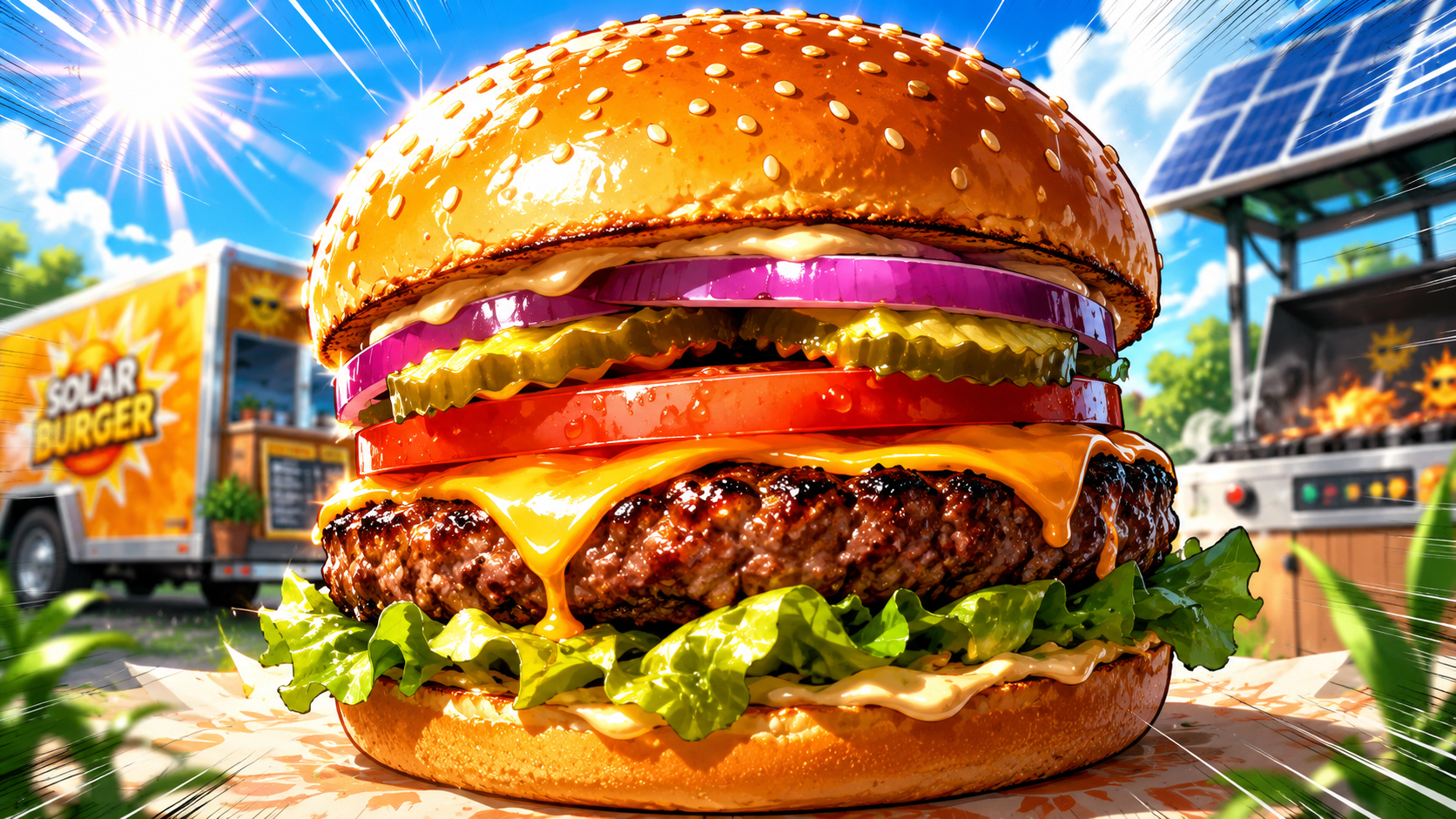
The chef’s rule is absolute: if it tastes like a science fair, the company fails. The burger has to be juicy, hot, and worth the joke.
 3
3
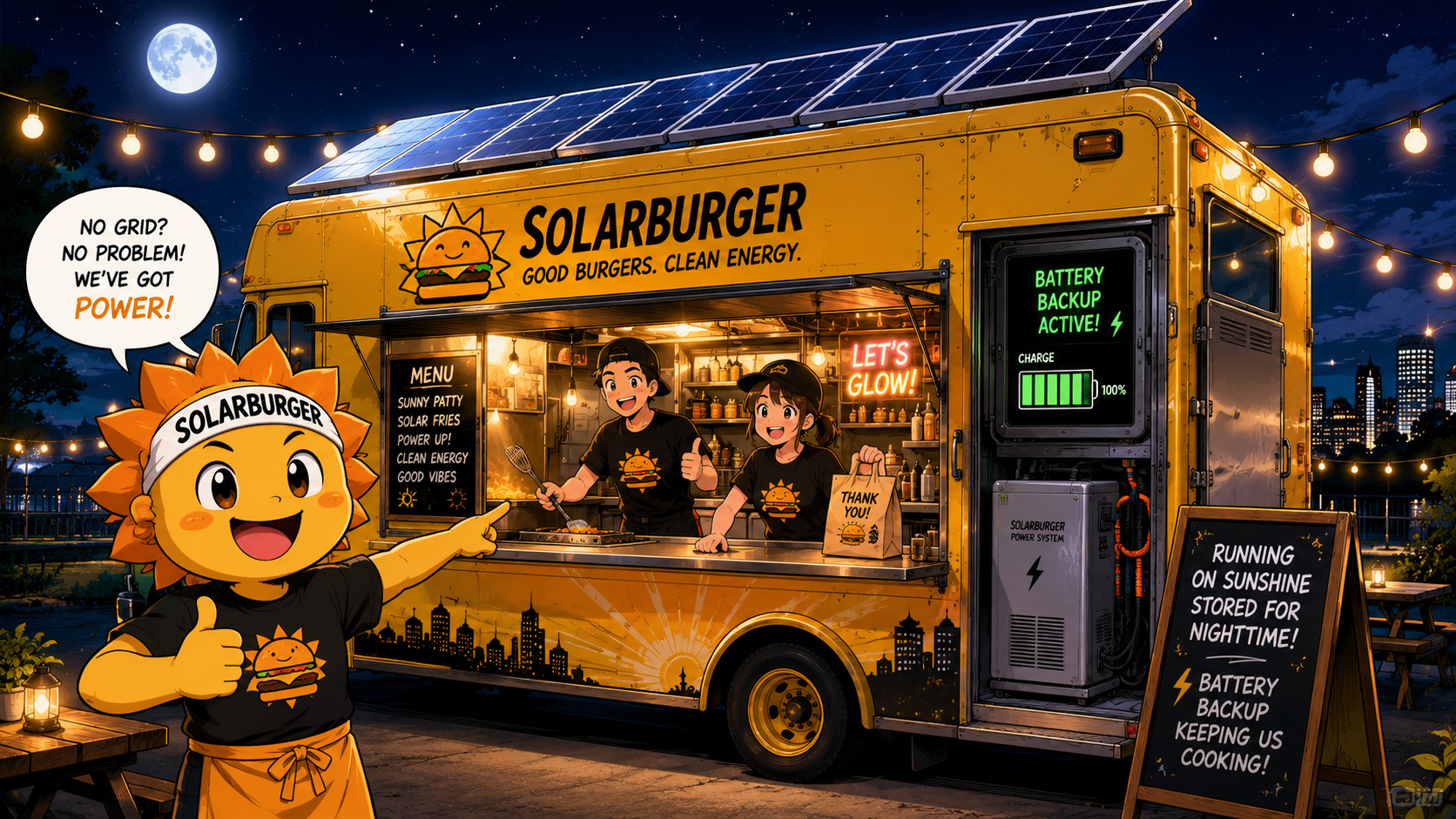
Solar-powered does not mean “closed after dark.” Batteries and backup systems keep the dream cooking when the sun clocks out.
In the story, Solarburger becomes a full restaurant energy system. The joke starts with cooking, but the real business has to power the whole operation.
The romantic version is simple: sunlight hits a solar cooking surface and the burger begins to sizzle. The manga version adds speed lines, dramatic shadows, heroic cheese, and a chef yelling at the sky.
The technical challenge is control. Burgers need dependable heat, safe cooking temperatures, repeatable timing, and a result that tastes like food, not an experiment.
Solar panels can power the boring things that make a restaurant real: lights, refrigeration, ordering systems, ventilation, signage, controls, and battery charging.
The founder wants to talk about revolution. The operator wants to know whether the refrigerator stays on. Both are right.
The first harsh lesson of Solarburger is that clouds do not care about lunch rush. Batteries turn solar from a sunny-day stunt into something closer to a real business system.
In the Season One finale, the cloud arrives, the crowd panics, and the battery system saves the grand opening.
The chef protects the whole story. Solar power may bring the crowd, but flavor brings them back. A Solar Burger must be more than clever. It must be good.
“Nobody eats the spreadsheet.”
A proper Solarburger should feel familiar enough to crave and strange enough to remember.
The central proof. If the patty works, the dream survives. If it fails, everyone blames the founder.
Melts under solar heat, sometimes too dramatically. Has survived more prototypes than the spatula.
A running joke on the menu. Sharp, green, and included to remind management that weather always gets a vote.
Toasted, golden, optimistic, and almost certainly used in a marketing slide titled “edible sunshine.”
A Solar Burger is funny because everyone wants the slogan to be true before the system is ready. The founder wants a chain. The engineer wants data. The operator wants permits. The chef wants a burger that does not embarrass him.
That gap between dream and reality is where the manga lives.
Clean energy can feel abstract. Solarburger makes it physical. You can see the panels, smell the grill, hear the line forming, and understand immediately that energy is not just a bill. Energy is lunch.
The comedy makes the solar idea easier to remember.
Every Solarburger prototype creates a new business lesson and at least one new facial expression.
Customer wait time increases by one fluffy villain.
The burger cooks fast. The spatula retires early.
The chef calls it “solar tartare” and refuses to serve it.
Everyone stops joking for one bite. Then the founder starts pitching franchises.